Retiling is one of the few bathroom projects where you can transform how a room looks without moving a single fixture. It’s also a job where two quotes can differ enormously, because “retile the bathroom” doesn’t describe a fixed amount of work — it describes anything from a single floor to every surface in the room.
Before a number means anything, you need to know exactly which surfaces are included and what has to happen to them first.
The scope question comes before the price question
Retiling can mean any of the following, and they are not remotely equivalent:
- Floor only. The simplest version. Existing floor comes out, new floor goes in.
- Floor plus a tub surround. A modest amount of wall tile in a defined area.
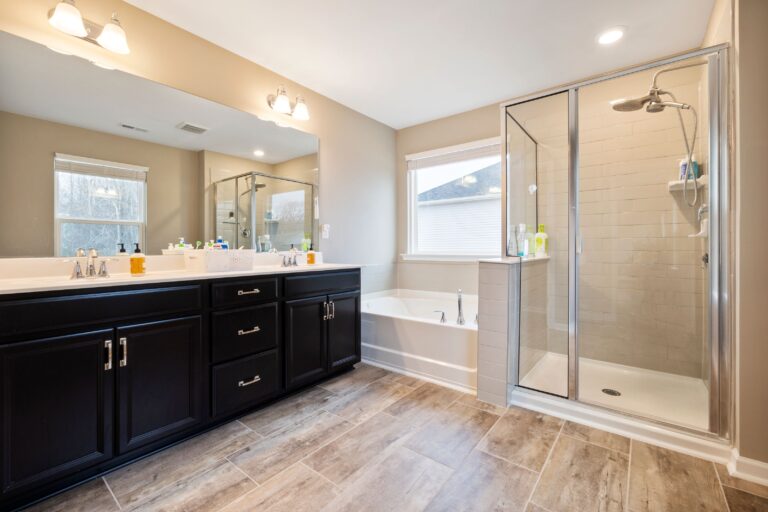
- Floor plus a full shower enclosure. Now waterproofing enters the picture, which changes the nature of the job entirely.
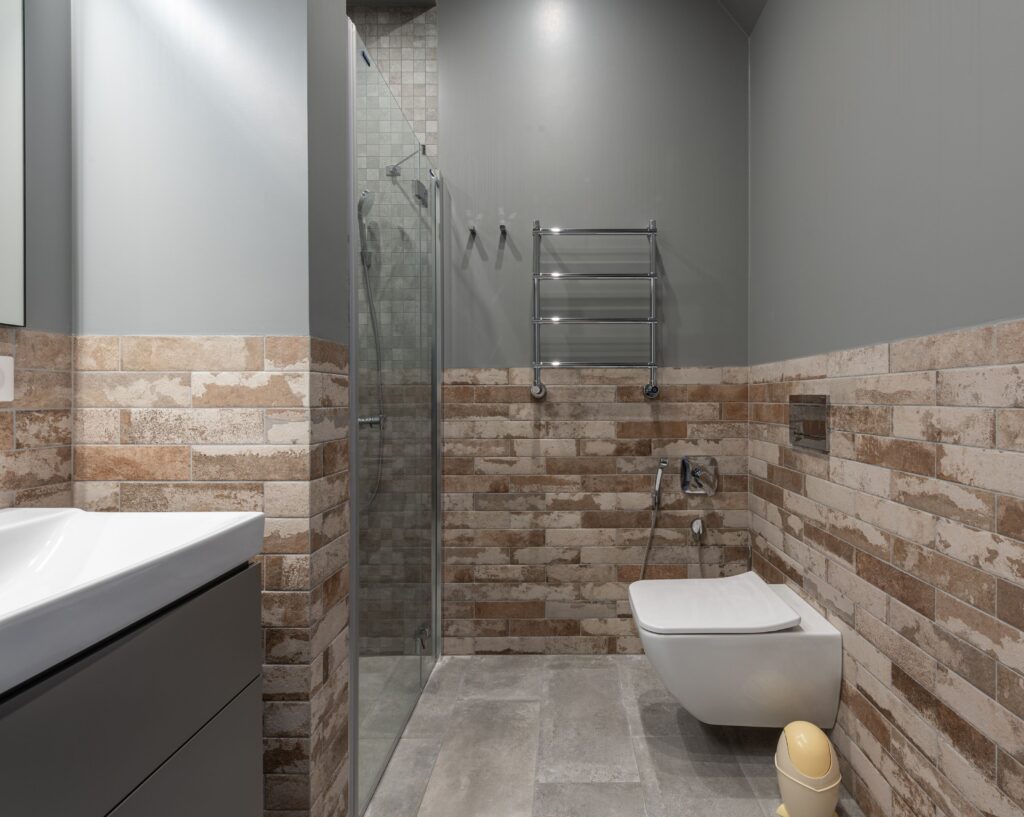
- Every surface. Floor, shower, wainscot or full-height walls. Several times the material and considerably more labor.
The jump from the second to the third is the one that surprises people. Tiling a tub surround is finishing work. Tiling a shower means building a waterproof assembly that has to keep water out of your walls for decades, and that is a different discipline with different consequences if it’s done badly.
Removal is real work
Most of a retile quote that isn’t tile is the work of getting the old surface off and the new surface ready.
Old tile has to come up, and how hard that is depends on what it’s stuck to. Tile set over a traditional mortar bed is heavy, slow to remove and produces a lot of debris. Tile bonded directly to a subfloor or backer board usually comes up more easily but takes the surface with it in places. Either way there’s demolition labor, disposal, and then repair of whatever the removal exposed.
This is also the stage where surprises appear. Soft subfloor near a toilet or tub, deteriorated backer board in a shower, or old waterproofing that has already failed are common finds in a room that’s been wet for decades. A good estimate says how those will be handled and priced rather than pretending they can’t happen.
Substrate preparation is the invisible line item
Tile is only as flat, as stiff and as durable as what it’s fixed to. Before anything is set, the surface has to be sound, clean, flat within tolerance, and stiff enough not to flex.
That can mean replacing sections of subfloor, adding an underlayment, installing backer board, applying a levelling compound, or building out a wall that isn’t plumb. None of it is visible in the finished room, all of it takes time and material, and skipping it is the most common reason tile fails early or looks uneven under raking light.
Large-format tile raises the bar here considerably. The bigger the tile, the flatter the substrate has to be, because any dip shows up as lippage between adjacent edges.
What the tile itself does to the number
Format and size
Large formats mean fewer joints and a calmer look, but more preparation and more careful setting. Mosaics and small formats need less flattening but involve far more pieces, more cuts and more time. Neither is automatically cheaper — the labor just moves to a different part of the job.
Material
Porcelain is dense, consistent and low maintenance, which makes it efficient to work with. Natural stone is heavier, more variable piece to piece, easier to damage during installation and generally needs sealing. It also often benefits from being laid out deliberately so the veining runs sensibly, which is time that a box-to-floor approach doesn’t spend.
Pattern and layout
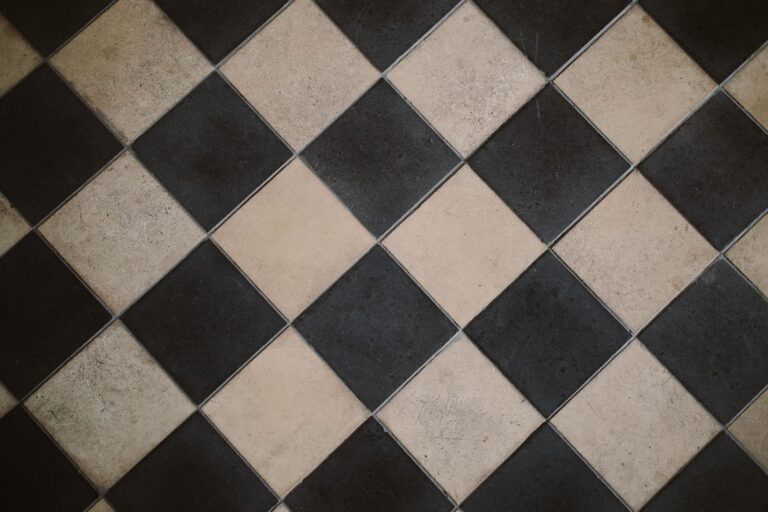
A straightforward stacked or offset layout is efficient. Herringbone, chevron, basketweave and mixed-format designs generate more cuts, more waste and more setting time. Diagonal layouts increase cuts at every perimeter. The pattern is a design decision with a labor cost attached — worth knowing before you fall for one.
The room itself
Lots of corners, niches, a curved wall, an awkward window in the shower, or a room that’s badly out of square all add cuts and fitting time. Two rooms with identical square footage can differ in labor simply because one has more edges.
What else belongs in a retile quote
- Waterproofing for any shower or wet area, specified as a defined system rather than a vague promise
- Trim and edge treatment — profiles, mitred outside corners, thresholds and transitions to adjoining floors
- Setting materials appropriate to the tile and substrate, plus grout and sealants
- Refitting whatever came off — toilet reset with a new seal, trim, door adjustments if the floor height changed
- Disposal of the old material
Questions that make quotes comparable
Ask each contractor:
- Which surfaces are included, exactly?
- Is removal of the existing tile included, and disposal?
- What substrate preparation is allowed for, and what happens if more is needed?
- If a shower is included, what waterproofing system is being used?
- Who supplies the tile, and what allowance is included if they do?
- How will edges, corners and transitions be finished?
If one number is far lower than the rest, it’s usually because something on that list isn’t in it.
Where to spend and where to save
The consistent advice: don’t economize on removal, substrate preparation or waterproofing, because those are the parts you cannot correct without taking the new tile back off. Do feel free to adjust tile selection and pattern complexity — a well-chosen porcelain in a straightforward layout, set out properly, looks excellent and installs efficiently.
And if you’re retiling mainly because the existing surface is dated rather than failing, it’s worth reading our honest take on whether you can tile over existing tile before committing to full removal — occasionally it’s a reasonable option, and often it isn’t.
Because we do our tile work in house rather than subcontracting it, this is the part of an estimate we can be most specific about. Our guide to what a bathroom remodel costs covers how tile fits into a whole-room budget, you can see finished work in our project gallery, or get in touch to talk through your room.