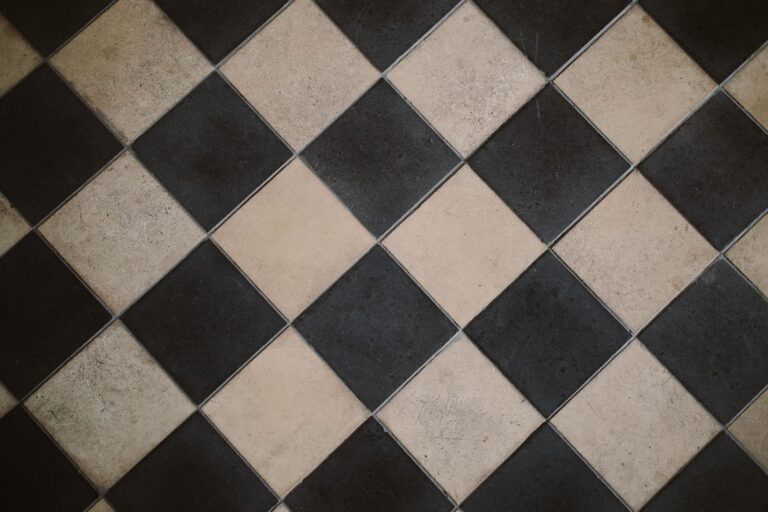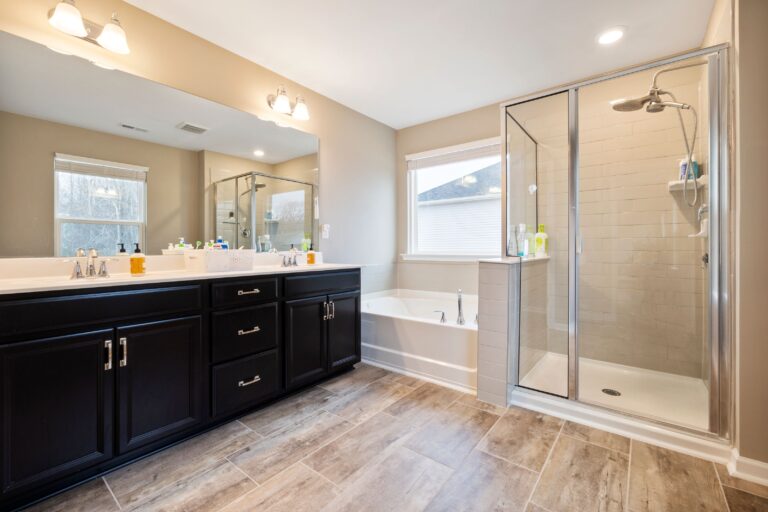
It’s a fair question, and it gets asked constantly: the existing tile is ugly but sound, demolition is messy and expensive, so can you just tile over it and be done?
Sometimes, yes. Often, no. And the honest answer depends on things you can check before anyone gives you a price — which is worth doing, because tiling over a floor that shouldn’t have been tiled over is one of the more expensive mistakes in a bathroom.
The short version
Tiling over existing tile can work on a floor when the existing tile is thoroughly bonded, the substrate beneath it is sound and stiff enough, the height increase doesn’t cause problems, and the surface can be properly prepared. Where any one of those fails, removal is the right answer.
It is rarely a good idea inside a shower, for reasons worth being blunt about.
When it can work
The existing tile is genuinely well bonded
This is the first test and it’s easy to do yourself. Tap across the floor with something hard. Solid tiles sound solid. Hollow-sounding tiles have lost their bond to the substrate underneath — and anything you install on top of a loose tile is only as good as that loose tile.
A few hollow tiles in one area might be cut out and patched. Hollow sounds across a large portion of the floor mean the whole assembly is unreliable, and covering it just buries the problem under a new layer.
The substrate underneath is sound and stiff
Tile is rigid and unforgiving. If the floor flexes underfoot, tile and grout crack — and adding a second layer of tile adds weight without adding stiffness.
Any bounce, movement or soft spots need to be understood before anything goes on top. If the subfloor beneath the old tile is compromised by past leaks, no amount of surface preparation compensates.
The extra height doesn’t cause problems
A second layer of tile plus the mortar bed raises the floor. That has knock-on effects that people consistently underestimate:
- The door may no longer clear the floor
- The threshold to the adjoining room becomes a step
- The toilet flange ends up recessed relative to the finished floor, which affects how the toilet seals
- The vanity toe kick, and any built-in, sits lower in the room
- Transitions to other flooring get awkward
None of these are automatically deal-breakers. All of them cost something to solve, and solving them can erode the savings you were chasing.
The surface can be prepared properly
Existing glazed tile is smooth and non-porous — the opposite of what mortar wants to grip. Preparing it properly, and using a product suited to bonding over existing tile, is not optional. Skipping that step is how tile-over-tile jobs fail within a year or two.
Flatness matters too. You’re inheriting whatever unevenness the old floor has, plus its grout joints. Large-format tile in particular needs a flat plane, and if the existing floor isn’t flat, it has to be brought flat before anything goes on it.
When to remove instead
Take the old tile out when:
- Tiles sound hollow across a meaningful area, or any are cracked or loose
- The floor moves, flexes or feels soft anywhere
- There’s any history of leaks, or any sign of water damage at the tub, shower or toilet
- The added height creates problems you’d have to engineer around
- You’re changing the layout, moving a fixture, or doing plumbing work anyway
- The existing installation is on an old mortar bed that’s already deteriorating
That last group is the common case in a full remodel. If the room is being gutted anyway, tiling over the old floor rarely saves much, and it permanently limits what can be inspected and corrected underneath.
Showers are a different conversation
Tiling over existing tile inside a shower is where we’d push back hardest.
The tile is not what keeps water out of your walls — the waterproofing behind it is. Covering an old shower surround with new tile leaves the original waterproofing exactly as it was, including whatever condition it’s in and whatever failures it may already have, now sealed under an additional layer.
Old shower enclosures are also the most likely place to find damage once they’re opened, precisely because they’ve been wet for decades. Covering that up is the opposite of what the room needs. If a shower is being redone, it’s worth taking it back and rebuilding the assembly properly.
What about wall tile elsewhere?
Non-shower wall tile — a backsplash, a wainscot — is more forgiving than a floor, since there’s no foot traffic and no deflection to worry about. The bond and preparation questions still apply, and so does the thickness: tile-over-tile changes how outlets, switches, trim and window returns sit relative to the finished surface.
The realistic trade-off
Covering rather than removing saves demolition labor, disposal and mess. That’s a genuine saving and sometimes it’s the right call — a sound, flat, well-bonded floor in a room that isn’t otherwise being touched is a reasonable candidate.
What it doesn’t do is buy you a fresh start. You inherit whatever is underneath, you can’t inspect what you’ve covered, and if the assembly below eventually fails you’re removing two layers instead of one.
The most useful way to decide is to be honest about why you’re asking. If it’s to avoid mess in a room that’s otherwise fine, that’s a sound reason. If it’s to avoid finding out what’s under there, that’s usually the argument for looking.
Before you decide
Do the tap test across the whole floor. Walk it and feel for movement. Check the door clearance and the threshold height. Look for any staining or softness near the tub, shower and toilet. Those four checks take ten minutes and will tell you most of what you need to know before anyone quotes.
Then get someone to look at it in person, because a floor that passes those tests can still have a story underneath that only shows up on closer inspection.
If a retile is part of a wider project, our guide to what a bathroom remodel costs and why estimates vary covers how tile scope affects the overall number, and what drives the price of a walk-in shower explains why the waterproofing behind the tile matters so much. You can see finished tile work in our project gallery or get in touch for an assessment.